Mold Remediation & Removal
Mold doesn’t wait — and neither should you. Whether you’ve spotted discoloration on a wall, caught a persistent musty odor, or recently experienced a water event, professional mold remediation and removal is the only path to a truly safe, healthy property. Since 1959, CRBR has delivered certified mold remediation and removal services to homes and businesses across Chico, Yuba City, Sacramento, Redding, and Reno, NV.
Our teams respond quickly, contain the problem thoroughly, and restore your space to safe, pre-loss condition.
Mold spores exist naturally in the environment. However, when moisture meets an organic surface indoors, those spores can colonize within 24 to 48 hours. Therefore, the most important thing you can do after any water event is call a professional immediately — before mold has the chance to spread into walls, flooring, and HVAC systems.
Related: Why the First 48 Hours After Water Damage Are Critical
Understanding Mold Remediation and Removal
What Is Mold Remediation — and Why Does It Matter?
Many people use the terms “mold removal” and “mold remediation” interchangeably. In reality, they describe different scopes of work — and understanding the difference protects you from incomplete solutions.
True mold removal refers simply to physically removing visible mold growth. Remediation, on the other hand, is a comprehensive process. It includes identifying the moisture source, containing active growth, removing contaminated materials, treating structural surfaces with antifungal agents, and verifying that spore counts return to safe, normal levels. Without remediation, mold nearly always returns — often worse than before.
At CRBR, we don’t cut corners. Consequently, every mold project we handle follows the IICRC S520 Standard for Professional Mold Remediation from assessment to clearance. This is the same standard followed by the industry’s most credentialed firms — and it’s what your insurance company expects to see documented.
Common Signs You Need Mold Remediation and Removal
Mold isn’t always visible. In fact, some of the most serious infestations hide behind walls, beneath flooring, and inside HVAC systems for months before anyone notices. Watch for these warning signs:
- Musty or earthy odors — especially in basements, crawl spaces, bathrooms, and laundry rooms
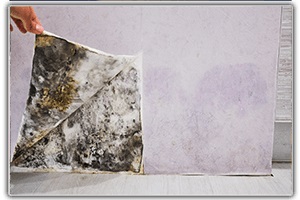
- Visible discoloration — black, green, gray, or white patches on walls, ceilings, grout, or wood
- Allergy-like symptoms — persistent sneezing, coughing, or eye irritation that worsens indoors
- Recent water damage — any flood, leak, or condensation problem that wasn’t fully dried within 48 hours
- Bubbling or warping surfaces — paint, drywall, or flooring that shows signs of hidden moisture
- History of water intrusion — properties with past flooding or chronic plumbing issues are at elevated risk
If any of these apply to your property, contact our nearest branch right away. Early intervention consistently produces better outcomes and lower remediation costs.
Our Mold Remediation and Removal Process
Step 1: Thorough Inspection and Assessment
Every mold remediation project begins with a detailed assessment. Our certified technicians inspect all visible areas and use moisture meters, thermal imaging cameras, and air sampling tools to locate mold growth — including colonies hidden behind drywall and beneath flooring. This step is essential because treating only visible mold leaves the underlying problem unresolved.
We then evaluate the extent of the contamination and classify it according to IICRC standards. This assessment drives every subsequent decision about containment, removal, and treatment. Additionally, we document all findings thoroughly — because your insurance company will need that record.
Step 2: Containment — Stopping the Spread
Before any removal begins, our team establishes containment barriers to prevent mold spores from spreading to unaffected areas. We use physical containment with plastic sheeting and create negative air pressure environments using HEPA-filtered air scrubbers. As a result, spores disturbed during removal are captured before they can travel through your home or business.
Our technicians also seal HVAC vents and returns in the affected zone. Furthermore, they use full personal protective equipment throughout the project — gloves, respirators, and Tyvek suits. This level of care protects both our crew and your property from cross-contamination.
Step 3: Mold Removal and Material Disposal
Once containment is in place, removal begins. Non-porous surfaces — like concrete, metal, and glass — can typically be cleaned in place with antifungal treatments and HEPA vacuuming. Porous materials that have absorbed mold growth, such as drywall, insulation, carpet, and wood framing, often require physical removal and proper disposal.
Our team handles all of this. We bag and dispose of contaminated materials following EPA and state guidelines. We don’t leave the decision of what to remove up to a surface inspection alone — we follow moisture readings and IICRC classification criteria. That data-driven approach consistently produces better results than visual assessment alone.
Step 4: Treatment and Antimicrobial Application
After removal, we treat all affected structural surfaces with EPA-registered antifungal and antimicrobial agents. These products eliminate residual mold colonies and create a barrier that inhibits future growth. We also treat adjacent surfaces in the containment zone, even if they don’t show visible contamination, because spores spread invisibly.
In addition to surface treatment, we run HEPA air scrubbers throughout the remediation zone to capture airborne spores for the duration of the project. Consequently, the air quality inside the affected area improves continuously throughout the remediation process — not just at the end.
Step 5: Drying, Clearance, and Verification
Mold remediation is only complete when the moisture source is controlled and the structure is dry. Therefore, we follow mold removal with structural drying using commercial-grade air movers and dehumidifiers — the same equipment our water damage mitigation and extraction team deploys after a flood.
Once drying is confirmed, we conduct post-remediation verification. This may include visual inspection, moisture measurement, and third-party air quality testing when indicated. We clear the job only when the space meets safe, pre-loss conditions. That’s our standard — and it hasn’t changed since we opened our doors in 1959.
What Causes Mold Growth? Local Conditions Matter
Mold thrives wherever moisture is present. Across our service areas in Northern California and Northern Nevada, the causes vary by region — but the urgency is always the same.
In Chico and the Sacramento Valley, seasonal atmospheric rivers bring heavy rainfall that can overwhelm gutters, foundations, and aging roof systems. As a result, crawl spaces and attics in older homes are particularly vulnerable during winter storm events.
In Yuba City and Marysville, proximity to the Feather and Yuba Rivers has historically meant elevated flood risk. Furthermore, high summer humidity trapped in poorly ventilated spaces creates ideal conditions for mold growth even without an obvious water event.
In Sacramento, slab-on-grade construction is common — and slab leaks can go undetected for months, quietly feeding mold colonies beneath flooring and inside wall cavities. Additionally, older commercial buildings with aging HVAC systems frequently develop moisture issues in ductwork and air handlers.
In Redding and Shasta County, freeze-thaw cycles in winter create ice dam conditions on roofs. Consequently, meltwater can infiltrate wall assemblies and insulation before damage becomes visible. Trinity County and the surrounding mountain communities face similar risks from heavy snowpack and rapid spring runoff.
In Reno, NV and the greater Truckee Meadows, desert climates don’t prevent mold — they just delay it. Burst pipes during cold snaps, poorly sealed crawl spaces, and leaking irrigation systems all create the moisture mold needs to establish. Our Reno branch serves Sparks, Carson City, Fernley, Fallon, and Lake Tahoe with the same fast response and IICRC-certified standards as our California locations.
Mold Remediation for Residential Properties
Your home should be the safest place in your life. When mold compromises that, the impact goes beyond property damage — it affects your family’s health, your comfort, and your peace of mind. Our residential mold remediation and removal teams understand that urgency personally, not just professionally.
We work carefully around your belongings, your schedule, and your family’s needs. If contents cleaning is required to address mold-affected furniture, clothing, or personal items, our team handles that in-house. Similarly, if affected materials include carpet or upholstery, our carpet, rug, and upholstery cleaning specialists step in as part of the same project workflow.
Throughout the process, your project manager keeps you informed at every stage. You’ll always know what’s been found, what’s being done, and what comes next — in plain language, not technical jargon.
Commercial Mold Remediation and Removal Services
Mold in a commercial property introduces risks that go beyond the building itself. Employee health, customer safety, regulatory compliance, and business continuity are all at stake. Fortunately, CRBR has the capacity and experience to address commercial mold problems at any scale — from a single contaminated office to a multi-floor building requiring full remediation and reconstruction.
Our commercial cleaning, mitigation, and disinfection division coordinates large-scope remediation projects with minimal disruption to your operations. We can work in phases, during off-hours, or under a customized schedule to keep your business moving while remediation proceeds. Moreover, our documentation protocols satisfy the reporting requirements of commercial insurance carriers, property managers, and facility compliance teams.
If structural repairs are required following mold removal, our construction and general contractor services team handles the rebuild — so you work with one company from remediation through restoration, not two.
Black Mold: What You Need to Know
Few things alarm property owners more than discovering what looks like black mold. The term “black mold” typically refers to Stachybotrys chartarum, a species associated with prolonged moisture exposure on cellulose-rich materials like drywall and wood. However, it’s worth knowing that many species of mold appear black, green, or gray — and that color alone doesn’t determine the level of hazard.
What does matter is the presence of active growth, the extent of the colonized area, and the moisture conditions that allowed it to develop. Therefore, any mold discovery — regardless of color — warrants professional assessment. Our technicians can identify species characteristics during the remediation process, and we can coordinate third-party air quality testing when clinical identification is needed for insurance or legal purposes.
If you’ve found what you believe to be black mold in your Chico home, Sacramento business, Reno rental property, or anywhere else across our service areas, call us today. Don’t disturb the growth and don’t run HVAC systems in the affected area — both actions can spread spores rapidly.
Mold Remediation After Water Damage
Water damage and mold are closely linked. In fact, nearly every significant mold infestation we remediate traces back to a water event that wasn’t properly dried — a flooded basement, a leaking roof, a broken pipe, or an appliance failure that went unnoticed for days.
If your property experienced water damage recently and wasn’t professionally dried, mold assessment should be a priority. Additionally, if you’re purchasing a property with a history of water intrusion, a mold inspection before closing could save you significant expense down the road.
Our water damage mitigation, extraction, and cleaning team and our mold remediation team coordinate seamlessly when both services are needed. This means faster response, cleaner documentation, and a single project manager who oversees both scopes of work.
Mold and Indoor Air Quality
Mold affects air quality in ways that aren’t always visible. Airborne mold spores and their byproducts — known as mycotoxins — can irritate the respiratory system, trigger allergic responses, and cause symptoms that are often misattributed to seasonal allergies or other conditions.
People with asthma, compromised immune systems, or sensitivities to mold are at elevated risk. However, even healthy adults can experience symptoms in heavily contaminated environments. This is especially relevant in commercial settings, where “sick building syndrome” — a cluster of symptoms experienced by multiple occupants — is often traced back to unaddressed moisture and mold issues.
Improving indoor air quality is one of the most important outcomes of professional mold remediation. After the mold is removed and surfaces are treated, air scrubbing continues until post-remediation testing confirms that spore counts have returned to normal. If your HVAC system was involved in spreading spores, our air duct and HVAC cleaning service clears those pathways as part of the overall restoration.
Working With Your Insurance Company
Mold remediation is often covered under homeowners and commercial property insurance policies — particularly when the mold resulted from a sudden, covered water event. However, coverage can be complex, and insurers require thorough documentation to process claims efficiently.
From the first day on-site, CRBR’s project managers document every aspect of the remediation: moisture readings, containment setup, materials removed, antifungal treatments applied, and drying verification. This documentation is formatted to meet the standards that insurance adjusters and third-party reviewers expect.
Furthermore, we communicate directly with your adjuster throughout the project. Our goal is to remove every administrative friction point so your claim moves forward as quickly as the remediation itself. If costs extend beyond your coverage limits, we offer financing options to bridge the gap — because financial uncertainty shouldn’t slow down your recovery.
Mold Remediation and Removal: Frequently Asked Questions
How do I know if I have a mold problem? The clearest signs are visible growth, musty odors, and recent water damage that wasn’t fully dried. However, mold can also be hidden in wall cavities, crawl spaces, and HVAC systems. If you’re uncertain, a professional assessment is always the right first step.
Can I clean mold myself? Surface mold on non-porous materials — like a small patch on a bathroom tile — can sometimes be cleaned with appropriate products. However, any mold covering more than ten square feet, or any mold associated with water damage, requires professional remediation. DIY cleaning without proper containment spreads spores and often doesn’t address the underlying moisture source.
How long does mold remediation take? Project timelines vary based on the size and severity of the infestation. Small residential jobs may be complete in one to two days. Larger or more complex projects — particularly those involving structural materials or HVAC systems — can take several days to a week. Your project manager will give you a realistic timeline after the initial assessment.
Is mold covered by insurance? Coverage depends on your policy and the cause of the mold. Mold resulting from a sudden, covered water event is generally covered. Mold resulting from long-term neglect or maintenance failures typically is not. We’ll help you document the cause and scope accurately so your claim has the strongest possible foundation.
Do I need to leave my home during remediation? Not always. For small-scale jobs in isolated areas, occupancy may be possible. For larger infestations involving significant containment, temporary relocation may be recommended — particularly for households with young children, elderly individuals, or immunocompromised family members. We’ll advise you based on the specific conditions of your project.
What happens after remediation is complete? Once remediation is verified and the space is clear, we can coordinate any needed reconstruction through our general contractor services. Drywall, flooring, insulation, and other materials removed during remediation can all be restored. You end the process with a safe, repaired, fully documented property.
Why CRBR for Mold Remediation and Removal
CRBR has been locally owned and independently operated since 1959. Over those 65-plus years, we’ve built our reputation one job at a time — in Chico, Yuba City, Sacramento, Redding, and Reno. Our technicians are IICRC-certified. Our processes follow industry standards. And our project managers are people you can actually talk to throughout the process, not a national call center managing your claim from another state.
We don’t have the overhead of a franchise system. Consequently, we’re able to respond faster, communicate more directly, and bring genuine local knowledge to every project. We know the housing stock, the climate patterns, and the insurance landscape in each of our service areas — because we’ve been working in them for generations.
When mold threatens your property, you deserve a team that treats it with the same urgency you do. That’s been our approach since day one — and it’s still our approach today.
Contact CRBR — Available 24 Hours a Day, 7 Days a Week
Mold problems don’t resolve on their own. The longer remediation is delayed, the more extensive — and expensive — the damage becomes. Reach out to your nearest CRBR branch for immediate assessment:
- Chico, CA (Corporate HQ): Serving Chico, Paradise, Oroville, Orland, Gridley, Corning, and surrounding areas
- Yuba City, CA: Serving Yuba City, Marysville, Roseville, Woodland, Rocklin, and the north Sacramento Valley
- Sacramento, CA: Serving Sacramento, Davis, Folsom, Rancho Cordova, Stockton, Vacaville, and surrounding communities
- Redding, CA: Serving Redding, Red Bluff, Anderson, Mount Shasta, Trinity County, and Northern CA
- Reno, NV: Serving Reno, Sparks, Carson City, Fernley, Fallon, and Lake Tahoe
Contact Us | View All Service Areas | Financing Available
CRBR has been a trusted name in property damage restoration since 1959. We are locally owned and independently operated — committed to the communities we serve across Northern California and Northern Nevada.