Smoke Damage Cleaning & Deodorization
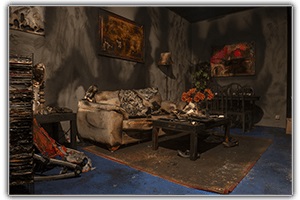
Smoke doesn’t stop when the fire does. Long after the flames are out, smoke residue, soot, and airborne particles continue damaging your property and threatening the health of everyone inside. Professional smoke damage cleaning and deodorization is the only reliable way to remove those hazards completely — from visible soot on surfaces to odors embedded deep in walls, flooring, and HVAC systems. Since 1959, CRBR has restored smoke-damaged homes and businesses across Chico, Yuba City, Sacramento, Redding, and Reno, NV — with the expertise, equipment, and responsiveness that this kind of damage demands.
Smoke damage is deceptive. Even a small kitchen fire can push corrosive particles into every room in the building. Therefore, acting quickly — and calling professionals who understand how smoke behaves — is the most important decision you’ll make after a fire event.
Related: Fire Damage Process | The First 48 Hours Are Critical to Minimizing Loss
Why Smoke Damage Requires Professional Cleaning and Deodorization
Smoke Travels Further Than You Think
Most property owners focus on the fire zone — the room or area where the fire burned. However, smoke behaves differently than fire. It migrates rapidly through HVAC systems, under door gaps, and through wall cavities, depositing residue and odor-causing compounds in rooms far from the point of origin. As a result, a fire in one room can affect an entire building within minutes.
Soot, the byproduct of incomplete combustion, is acidic. When it lands on surfaces, it immediately begins to corrode metals, discolor walls, yellow plastics, etch glass, and degrade fabrics. Furthermore, without prompt professional cleaning, some of that damage becomes permanent. Smoke-stained walls turn irreversibly yellow within days. Chrome and metal fixtures can begin to pit and rust within hours.
That’s why professional smoke damage cleaning and deodorization can’t wait. The sooner a trained team begins the process, the more of your property — and its contents — can be saved.
What Smoke Damage Actually Leaves Behind
Smoke and soot are not simply dirty. They’re chemically complex mixtures of carbon particles, acids, aldehydes, and volatile organic compounds (VOCs). These substances coat surfaces and penetrate porous materials at a microscopic level. Consequently, surface-level cleaning alone doesn’t eliminate smoke odors or fully decontaminate a space.
Additionally, the type of material that burned determines the nature of the residue. Protein fires — like stovetop cooking fires — produce nearly invisible but extremely pungent residue. Synthetic material fires leave thick, oily soot that smears and spreads on contact. Natural material fires produce dry, powder-like residue that spreads easily through air movement. Each type requires a different cleaning approach, different chemicals, and different handling protocols.
Our technicians are trained to identify residue types and apply the right technique to each surface. That specificity is what separates professional restoration from general cleaning — and it’s why DIY attempts often make smoke damage worse, not better.
Our Smoke Damage Cleaning and Deodorization Process
Step 1: Assessment and Damage Classification
Every smoke damage project begins with a thorough walkthrough assessment. Our IICRC-certified technicians inspect all areas of the property — including rooms that appear unaffected — using air quality tools and residue testing to identify the full scope of contamination. We classify the damage by severity: minor (isolated area, light residue), moderate (multiple rooms, moderate soot and odor), or major (structural smoke infiltration, extensive contents damage).
This classification drives everything that follows: staffing, equipment deployment, cleaning protocols, and project timeline. Moreover, we document every finding with photos, moisture readings, and surface contamination notes — because your insurance adjuster will need that record.
Step 2: Emergency Stabilization and Securing the Property
Before cleaning begins, we stabilize the property. If windows, doors, or the roof were compromised during the fire event, we coordinate emergency board-up and property securing services to prevent weather intrusion, vandalism, and further structural damage. Additionally, we isolate the HVAC system to prevent further smoke particle distribution throughout the building before duct cleaning begins.
At this stage, we also separate salvageable contents from unsalvageable ones. Items that can be restored are carefully documented, inventoried, and prepared for professional cleaning. Furthermore, items that cannot be saved are documented in detail for insurance claim purposes — so every loss is accounted for.
Step 3: Soot and Residue Removal
Soot removal is one of the most technically demanding steps in smoke damage restoration. Because soot is acidic and spreads easily, technicians must use the correct tools and methods for each surface type. Dry sponging is used first on porous surfaces like drywall and acoustic tiles to lift loose residue without smearing. Chemical cleaners and wet cleaning follow for harder, non-porous surfaces like tile, metal, and glass.
We clean from top to bottom and from clean areas toward contaminated ones — a standard protocol that prevents cross-contamination. Ceilings, walls, light fixtures, cabinets, countertops, and structural elements all receive thorough attention. In addition, our team removes soot from HVAC components to prevent recirculation through air duct and HVAC cleaning as part of the restoration scope.
Step 4: Contents Cleaning and Restoration
Smoke doesn’t discriminate between structure and belongings. Furniture, clothing, electronics, documents, artwork, and household items all absorb smoke residue and odor. Therefore, our contents cleaning specialists assess every item individually and apply the appropriate cleaning method for its material and condition.
Fabric items — including clothing, upholstery, curtains, and rugs — often require specialized laundering or dry cleaning with odor-neutralizing agents. Hard-surface items receive chemical cleaning and deodorization. Electronics that were exposed to smoke require careful assessment, as soot is conductive and can cause internal corrosion. Our team coordinates specialist evaluation for electronics when the situation warrants it. Simultaneously, carpet, rug, upholstery, and tile cleaning is performed in-house, keeping your project coordinated under one team.
Step 5: Advanced Deodorization Techniques
Surface cleaning removes residue. True smoke damage deodorization, however, requires penetrating the porous materials where odor compounds are trapped. Smoke odors that aren’t treated at the molecular level will return — especially when temperature or humidity rises. Our team deploys multiple advanced deodorization methods based on the specific conditions of each project:
Thermal Fogging — A petroleum-based solvent is heated to create a fog of microscopic deodorizing particles that penetrate the same porous pathways smoke traveled through. Thermal fogging is particularly effective in wall cavities, under flooring, and inside furniture — areas that surface cleaning can’t reach.
Ozone Treatment — Industrial ozone generators produce ozone (O₃), which reacts with and permanently breaks down odor-causing compounds at the molecular level. Ozone treatment is highly effective for severe or widespread smoke odors. However, it requires the property to be vacated during treatment. Consequently, we schedule this carefully and coordinate ventilation and clearance after treatment.
Hydroxyl Generators — Unlike ozone, hydroxyl generators can be used safely while the building is occupied. They produce hydroxyl radicals that neutralize odors and VOCs from smoke damage without displacing occupants. This is particularly useful in commercial settings where operational continuity matters.
HEPA Air Scrubbing — Throughout the cleaning and deodorization process, we run HEPA-filtered air scrubbers to continuously capture airborne smoke particles, soot, and odor compounds from the air. As a result, air quality improves progressively throughout the project — not just at the end.
Encapsulation Sealing — For surfaces with deep soot absorption that cannot be fully removed — such as heavily affected wood framing — we apply a professional encapsulating sealant that traps residual odor and prevents it from off-gassing into the living space. This step is followed by reconstruction through our general contractor services.
Step 6: Fire Retardant Cleanup
In California, wildfire suppression aircraft and ground crews deploy fire retardant across large areas of the landscape and onto threatened structures. This retardant — typically red in color — contains fertilizers, corrosion inhibitors, and thickening agents that can stain and damage surfaces if not removed promptly. Our team has extensive experience in fire retardant cleanup throughout Northern California, particularly in communities like Paradise, Redding, and the surrounding foothill regions that have been impacted by major wildfire events.
Fire retardant cleanup requires specific rinsing protocols and neutralizing agents. Additionally, retardant that has dried and hardened on surfaces needs mechanical removal before chemical treatment. We handle this as part of the broader smoke damage cleaning and deodorization scope whenever wildfire exposure is involved.
Smoke Damage Cleaning Across Our Service Areas
Chico, CA and the North Valley — Wildfire Proximity Matters
CRBR has been headquartered in Chico since 1959. Over those 65-plus years, our team has responded to some of the most significant fire events in Northern California history — including fires that swept through Paradise, Magalia, Oroville, and communities across Butte and Glenn Counties. We understand wildfire smoke damage intimately: the way it layers onto structures in thick deposits, how fire retardant interacts with building materials, and the specific challenges of cleaning properties exposed to smoke from vegetation and structural fires simultaneously.
Our Chico team serves the greater north valley — including Orland, Corning, Gridley, Willows, and Lake Almanor — with 24/7 emergency availability and a full inventory of smoke damage cleaning and deodorization equipment staged locally for rapid deployment.
Sacramento Region — Urban and Suburban Fire Risks
The Sacramento area presents a different smoke damage profile than the foothill communities. Here, kitchen fires, electrical fires, and structure fires are the primary sources of smoke damage for residential and commercial properties. Additionally, seasonal wildfire smoke from surrounding regions can affect interior air quality even in properties that haven’t experienced a direct fire event.
Our Sacramento and Yuba City branches serve a wide geographic area — including Davis, Folsom, Rancho Cordova, Roseville, Marysville, Woodland, Rocklin, Stockton, Vacaville, and surrounding communities. Both branches maintain IICRC-certified technicians and the full range of deodorization equipment needed for residential and commercial smoke damage projects.
H3: Smoke Damage Cleaning in Redding and Northern California
Redding and Shasta County sit at the edge of California’s high wildfire risk zone. As a result, our Redding branch has accumulated substantial experience with both structure fire smoke damage and wildfire-related smoke and retardant cleanup. We serve Anderson, Red Bluff, Mount Shasta, Trinity County, Siskiyou County, and surrounding communities with the same rapid-response capability as our other branches.
Northern California’s dry summers and wind patterns mean that smoke can infiltrate homes rapidly during fire events — even when the structure itself isn’t directly threatened. Therefore, property owners in this region should understand that smoke infiltration damage can occur even without visible fire damage to their building.
H3: Smoke Damage Deodorization in Reno, NV and the Sierra Nevada
Our Reno, NV branch serves property owners throughout Sparks, Carson City, Fernley, Fallon, and the Lake Tahoe basin. The Tahoe region in particular has faced significant wildfire pressure in recent years. Consequently, smoke damage from nearby fire events — including smoke infiltration into vacation properties and second homes — has become an increasingly common service request in this area.
Our Reno team brings the same IICRC-certified standards and advanced deodorization equipment as our California locations. Furthermore, we understand the specific challenges of cleaning high-altitude properties, seasonal cabins, and Tahoe basin structures that may have sat exposed to wildfire smoke for extended periods.
H2: When Smoke Damage Cleaning Overlaps With Other Services
Smoke damage rarely occurs in isolation. Fire suppression efforts introduce significant volumes of water into a property — from firefighting hoses, sprinkler systems, and fire retardant application. Consequently, smoke damage and water damage almost always require simultaneous attention.
Our water damage mitigation, extraction, and cleaning team coordinates directly with our smoke damage specialists when both services are needed. This means a single point of contact, consistent documentation, and no delays caused by coordinating between separate contractors. Additionally, if the fire or smoke compromised structural materials — drywall, framing, flooring, or roofing — our storm and structural damage repair and general contractor teams handle the rebuild phase once cleaning and deodorization are complete.
For commercial properties, our commercial cleaning, mitigation, and disinfection team manages the full scope of smoke damage restoration — including phased work plans to minimize operational disruption during recovery.
H2: What You Should — and Shouldn’t — Do After Smoke Damage
Taking the right actions immediately after a smoke event significantly affects the outcome. Here’s practical guidance from our team:
Do:
- Call CRBR as soon as the fire department clears the property for entry
- Ventilate the property by opening windows and doors if weather conditions permit
- Document visible damage with photos before touching anything
- Contact your insurance company promptly to begin the claims process
- Remove pets and people with respiratory sensitivities from the property until professional cleaning is complete
Don’t:
- Attempt to wipe or scrub soot from walls, ceilings, or upholstery — this smears and embeds residue deeper into the surface
- Run your HVAC system — doing so distributes smoke particles and odor compounds throughout the entire building
- Use household air fresheners or candles — these mask odors temporarily and don’t treat the underlying contamination
- Discard items before a professional assessment — many items that appear beyond saving can be successfully restored
- Delay calling for professional help — every hour of inaction allows soot to cause additional, often irreversible damage
Working With Your Insurance Company After Smoke Damage
Smoke damage claims are among the most documentation-intensive in the restoration industry. Insurers require detailed records of the damage scope, cleaning protocols used, and materials removed or restored. Fortunately, CRBR’s project managers handle this documentation systematically from the first day on-site.
We produce written scope reports, photo documentation, equipment logs, and contents inventories in formats recognized by regional and national insurance carriers. Moreover, we communicate directly with your adjuster throughout the project — coordinating inspections, answering technical questions, and ensuring that no portion of the covered scope falls through the cracks.
If out-of-pocket costs arise beyond your coverage limits, we offer financing options to ensure the pace of your recovery isn’t limited by financial uncertainty.
Frequently Asked Questions About Smoke Damage Cleaning and Deodorization
How long does smoke damage cleaning take? Timeline depends on the size and severity of the damage. Minor smoke events in isolated rooms may be addressed in one to two days. Moderate damage requiring full-property cleaning and deodorization typically takes three to five days. Major damage involving structural smoke infiltration, contents pack-out, and extensive deodorization may take a week or more. Your project manager will provide a realistic estimate after the initial assessment.
Can smoke odor ever be fully eliminated? Yes — when professional methods are used correctly. Surface cleaning alone doesn’t eliminate embedded odors. However, thermal fogging, ozone treatment, hydroxyl generation, and HEPA air scrubbing together address odors at every level — surface, subsurface, and airborne. Proper deodorization leaves properties genuinely odor-free, not just masked.
What’s the difference between soot cleaning and smoke deodorization? Soot cleaning removes the visible and physical residue that smoke deposits on surfaces. Deodorization targets the chemical compounds trapped in porous materials that cause odors. Both are necessary — and neither substitutes for the other. Our process always addresses both.
Does smoke damage affect air quality even after visible cleaning? It can, if deodorization isn’t thorough. Smoke particles and VOCs trapped in wall cavities, insulation, and ductwork continue off-gassing into living spaces even after surfaces appear clean. That’s why we include air scrubbing, HVAC cleaning, and post-cleaning air quality verification in every smoke damage project.
Will my insurance cover smoke damage cleaning and deodorization? In most cases, yes. Smoke damage resulting from a covered fire event is typically included in homeowners and commercial property policies. Coverage extends to cleaning, deodorization, contents restoration, and related repairs. We’ll help document everything your insurer needs from day one.
Is it safe to stay in a smoke-damaged property during cleaning? Generally, we recommend vacating the property during active cleaning and especially during ozone treatment. Smoke residue and airborne particles pose genuine health risks — particularly for children, elderly individuals, and anyone with respiratory conditions. Your project manager will advise on when re-occupancy is safe based on the specific conditions of your project.
CRBR — Serving Northern California and Nevada Since 1959
For over 65 years, CRBR has been the team that Northern California and Northern Nevada property owners call when things go wrong. We’re not a franchise. We don’t have a national call center. When you call CRBR, you reach people who know your community — because they live and work in it.
Our technicians are IICRC-certified in fire and smoke restoration. Our equipment includes everything required for professional smoke damage cleaning and deodorization — from truck-mounted cleaning systems to thermal foggers, ozone generators, hydroxyl units, and HEPA air scrubbers. And our project managers stay with each job from first call to final clearance.
That consistency — in people, process, and communication — is what sets us apart from franchises that assign a different crew to each phase of your project. You deserve a team that’s accountable for the whole job. That’s exactly what CRBR delivers.
Contact Your Nearest CRBR Branch — Available 24/7
Don’t wait. Smoke damage worsens quickly, and every hour matters. Reach your nearest branch for immediate response:
- Chico, CA (Corporate HQ): Serving Chico, Paradise, Oroville, Orland, Corning, Gridley, Lake Almanor, and surrounding areas
- Yuba City, CA: Serving Yuba City, Marysville, Roseville, Rocklin, Woodland, Live Oak, and the north Sacramento Valley
- Sacramento, CA: Serving Sacramento, Davis, Folsom, Rancho Cordova, Stockton, Vacaville, West Sacramento, and surrounding communities
- Redding, CA: Serving Redding, Anderson, Red Bluff, Mount Shasta, Trinity County, Siskiyou County, and Northern CA
- Reno, NV: Serving Reno, Sparks, Carson City, Fernley, Fallon, and Lake Tahoe
Contact Us | View All Service Areas | Financing Available
CRBR has been a trusted name in property damage restoration since 1959. Locally owned and independently operated — committed to the communities we serve across Northern California and Northern Nevada.